


Fashion has long occupied an uneasy position within institutional art spaces: commercially driven, seasonally directed, and widely consumed. Unlike other arts, fashion must - in part - be functional enough to be worn on the human body. This utilitarian element of fashion has largely historically precluded it from the cultural seriousness afforded to other, more classically defined, art forms. In the 2016 documentary The First Monday in May which followed the initial creation of the Met Gala, Anna Wintour - famed British editor and grand overseer of the annual event - even admitted, “There might be some questions about whether fashion belongs in a museum like the Met.” This year’s Met Gala feels, in many ways, like a deliberate answer to that question.
The Gala, often considered to be the annual apex of fashion, primarily functions as a yearly fundraiser for The Metropolitan Museum of Art’s Costume Institute. The Institute is unique in that it is the only department required to independently fund its operations. The Gala is timed to mark the opening of the department’s spring exhibition. Event attendees are famously given a dress code to interpret. This is the crux of the Met Gala and a huge part of what drives its continued fervor for both attendees and observers alike. The dress code introduces a “graded” element to the evening. This signature measurable element of dress code adherence keeps intentionality top of mind and provides structure for all to be able to quantify who actually dressed up to code.
The dress code is a separate, but often adjacent, concept to the exhibit it supports. This year, organizers transfigured the exhibit, “Costume Art”, into the pegged dress code: “Fashion is Art.” Period! Rather than posed as a question, this year’s dress code was delightfully declarative. Is fashion art? Resoundingly, yes! There is most certainly a careful precision that goes into every aspect of design. From textile selection, to silhouette creation, to color combination - skills that require the same kind of artistry you’d expect from the arsenal of a painter of sculptor. This year’s event also commemorates the inauguration of the museum’s 12,000-square-foot Condé M. Nast Gallerie. The newly-installed wing is a literal elevation for the Costume Institute, which was previously housed in the museum’s basement. Perhaps a not-so-subtle commentary on how fashion has historically been regarded as an art form. Now, the new wing places fashion front and center at the Met. It’s a welcome reflection of the changing tides in industry perspective. Something this community, in particular, already knows!
The Met Museum described the dress code as an invitation to guests to “express their own relationship to fashion as an embodied art form and celebrate the countless depictions of the dressed body throughout art history.” Not untrue in nature, but a little nebulous for the prospective attendee, no? Wintour, in a speech delivered just before the evening’s attendees could show up by the van-load, proffered a more helpful read on the night’s outfit protocol: “It’s an opportunity to showcase the work that goes into fashion. Work that includes the efforts of hairdressers, drivers, and caterers, who make the Met Gala itself possible.” I’ll admit, the Met Gala dress code is a delicate needle to thread. The best themes, by my barometer, are prescriptive enough to give the night a clear aesthetic thrust, but broad enough to permit varied individual interpretation. Past years that exemplify this include 2018’s “Heavenly Bodies” yielded rich examinations of Catholic iconography and 2015’s “China: Through the Looking Glass” explored the dialogue between Chinese aesthetics and Western fashion, producing one of the event’s most enduring images in Rihanna’s imperial yellow Guo Pei cape. On the other hand, dress codes that center on one designer like 2023’s Karl Lagerfeld and 2014’s Charles James offers aesthetic boundaries that are meant to be helpful, but often end up being too rigid and make the night’s red carpet feel a little too one-note. The exception to that rule is, of course, the 2011 dedication to the inimitable Alexander McQueen - an exhibit so popular that the Met had to extend it and even changed their operational hours to accommodate the hour-long lines wrapped around multiple city blocks hoping to catch a glimpse of the British designer’s wares.
The one thing left up for debate is whether attendees this year embraced - or ignored - the assigned dress code. Spoiler: I admit I felt a little underwhelmed! Meep! In many ways, it felt like a missed masterpiece. This year’s theme offered a compelling defence of fashion as a true art form, but the red carpet rarely rose to the opportunity to convincingly make the case. A huge tenet of Taylor Swift Style is the thoughtful analysis and contextualization of visuals. What ultimately transforms a good look into something greater than the sum of its parts is the strength of its storytelling. Does this look say something about the person who designed it and the person who intentionally chose to wear it? Does it honor the established house codes of the designer? Does it seek to creatively interpret the theme of the night? These are my personal measurements for success.
Below, a few of my favorites from last Monday’s Met Gala — plus some additional context on the circumstances of this year’s event. I look forward to hearing if you felt similarly in the comments.

📧 Email: This newsletter will likely be cut off in your inbox. Best to view it in app or in browser. Click through to read it in full on your web browser or the Substack app.
💚 Engagement Matters: If now isn’t the moment for a paid subscription, no worries. There are other - no cost! - ways to support Liner Notes. Becoming a free subscriber, tapping the ‘heart’ button, sharing this post, or leaving a comment are all lovely ways to support this space and the work I do. Every bit of engagement helps support independent writing more than you might think. I’d be so grateful if you considered.
Before proceeding with the red carpet recap itself, a bit of context for this year’s Gala felt particularly pertinent to include. Indeed, there has always been a tension that is core to the existence of the Met Gala. It is a fundraiser to celebrate the arts. It is an extravagant display of wealth that parades the parallel universe the celebrity economy exists in. There’s always been a certain degree of tolerance for the paradox. But this year, with “tech’s semihostile takeover of the Vogue’s annual party”, that resilience has thinned.
In April 2014, Anna Wintour, then editor-in-chief of Vogue put then-engaged Kim Kardashian and Kanye West on the cover of her magazine. The ripple effect of that choice forever disturbed the equilibrium of what, as Wintour herself put it, “deeply tasteful” discernment is. The choice was controversial and viewed by many as Wintour conceding to celebrity spectacle over institutional rigor — using fashion’s most sanctified title to ratify Kardashian’s cultural ascent rather than to uphold its traditional standards of taste.
This year’s Met Gala seems to parallel that pivot. In November 2025, the Metropolitan Museum of Art announced the details for its annual Costume Institute exhibition and corresponding Gala, including the exhibition theme (“Costume Art”) and dress code (“Fashion is Art”). Buried within the customary language was another disclosure: the exhibition and benefit would be “made possible by Jeff and Lauren Sánchez Bezos.” The Times described the move as “the latest sign that the Bezoses are intent on infiltrating the world of high fashion and celebrity.”
As she did with the Kardashian-West cover, Wintour’s acceptance of Bezos’ Gala sponsorship signals a certain degree of external capitulation. For event watchers, it brings to the forefront that Vogue’s most coveted social event can be bought — if the price is right. To be sure, it isn’t that the Met has never courted wealthy sponsors previously in order to fund its red carpet. The difference is those corporate sponsors weren’t using fashion as a battering ram to legitimize their personal selves separate from the conglomerates they represent. Amazon didn’t purchase the lead title sponsorship for the evening - to a price tag of $10 million - Jeff and Lauren Sánchez Bezos did. This visibility, and Wintour’s tacit approval, within the fashion ecosystem marks another step in a broader campaign of cultural legitimization, particularly following Sánchez Bezos’s heavily circulated (and critiqued) digital wedding cover for Vogue. When the Met Gala becomes an event to shill toothpaste and pharmaceuticals and centers the faces of the ultra rich, it gives the celebration of arts and creativity a different - and distinctively less fun - sheen.

Photos throughout via Getty Images, unless otherwise noted.
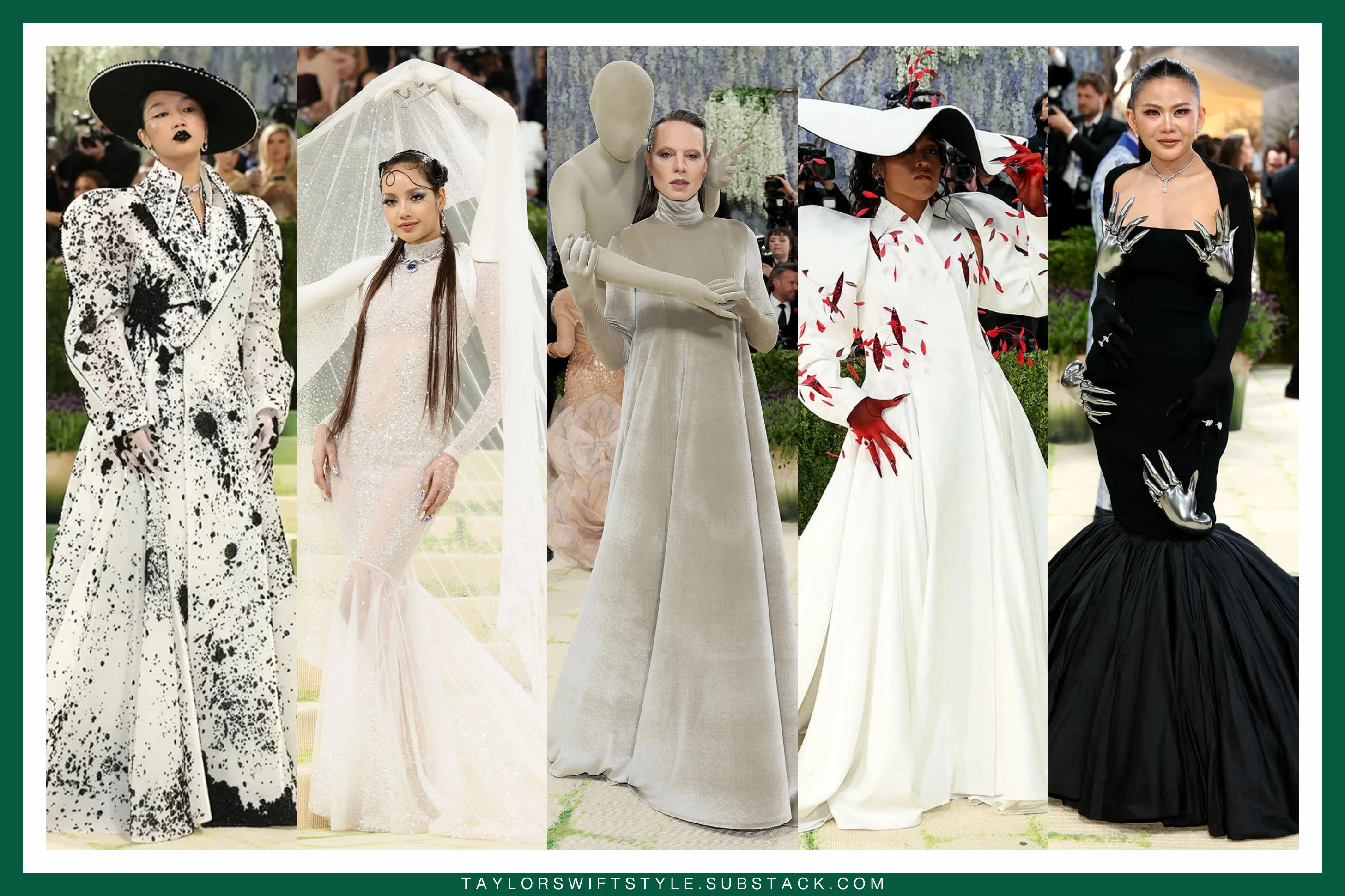
Wun For All And All For Wun
First I must shoutout the designer who I felt won (Wun?) the evening - Robert Wun! Longtime followers of the visionary designer will argue that this year’s theme neatly set him up for a winning night. His take on couture? Theatrical. His attention to detail and execution of craft? Remarkable. What a lineup of looks that all felt perfectly attuned to the wearer and also fully embodied the theme. A closer look at my favorites:
Audrey Nuna’s ensemble - from Wun’s Fall 2025 collection - appeared to reference the chaotic blotting patterns of painter Jackson Pollock, making it an easily understood visual tie-in to this year’s artsy theme. But upon closer inspection of the fabric, seeing that each of those splatters were not paint but instead 15,000 intricately embroidered black Swarovski crystal beads firmly says to me fashion IS art. Indeed, Nuna told Vogue ahead of walking the red carpet, “Robert Wun’s work to me, is the epitome of ‘Fashion is Art.’ This piece imagines a UV light, revealing stains of the past via crystal beads,” she said, adding, “I love the idea that you can make something beautiful out of past pain, and that you can display and present your growth in a way that pays homage to it while acknowledging its messiness too.”
Lisa’s custom gown took cues from Wun’s Fall 2025 Couture show, reimagining his surrealist appendages into something equally dramatic but a little more personal for Lisa. Inspired by her Thai roots, Wun 3D-scanned Lisa’s own arms and arranged them to evoke traditional Thai dance poses — a clever nod not only to her heritage, but to another art form that, like fashion, has fought for institutional legitimacy. This is what I’m talking about! A look that incorporates existing house codes from the designer, but moulds it to tell a personal story of the wearer, and fits the theme of the night. It CAN be done!
Jordan Roth wore a custom design that riffed on Wun’s incredible Spring 2024 Couture finale look. The theatricality felt very in tune with Roth’s vocation as a Broadway producer. Roth said to Vogue the look was a reference to one of his favorite works inside the Met: Pygmalion and Galatea by Jean-Léon Gérôme, depicting the moment the sculpture of Galatea was brought to life by the goddess Venus. “My curiosity,” said Roth, “was what would it be like to be a body in that sculpture, to live in that sculpture?”
Naomi Osaka pulled from Wun’s Spring 2023 Couture runway. Rather than reference the dress code, her double-duty looks (a coat and hat were dramatically revealed to make way for a more sensuous red sequin-embellished dress underneath) seemed more to nod to the actual exhibit inside the Met which “organized into a series of thematic body types” that “connect artistic representations of the body with fashion as an embodied art form.” Her structured coat featured feathered details erupting from slices in the fabric, mimicking blood spatter. Meanwhile, her dress more seemed to viscerally map the anatomical layout of the body. Chilling.
Nichapat Suphap’s custom look had an unsettling interactive element to it. While not captured in images, it’s worth watching video of her on the Gala red carpet to see the fingers wrapped possessively around her body splay and move. custom Robert Wun Couture gown introduced an interactive element with motion designer Casey Curran, with silver metal hands placed across the bodice and hips. What isn’t immediately visible in still images is that the fingers moved as she walked, adding a kinetic layer to the design. This detail shifts the look beyond static construction into something performative, reinforcing the idea of fashion as an evolving, responsive form.
Couture’s Best Colors For Your Portrait
In-step with the evening’s artsy theme, many attendees found inspiration in their favorite paintings.
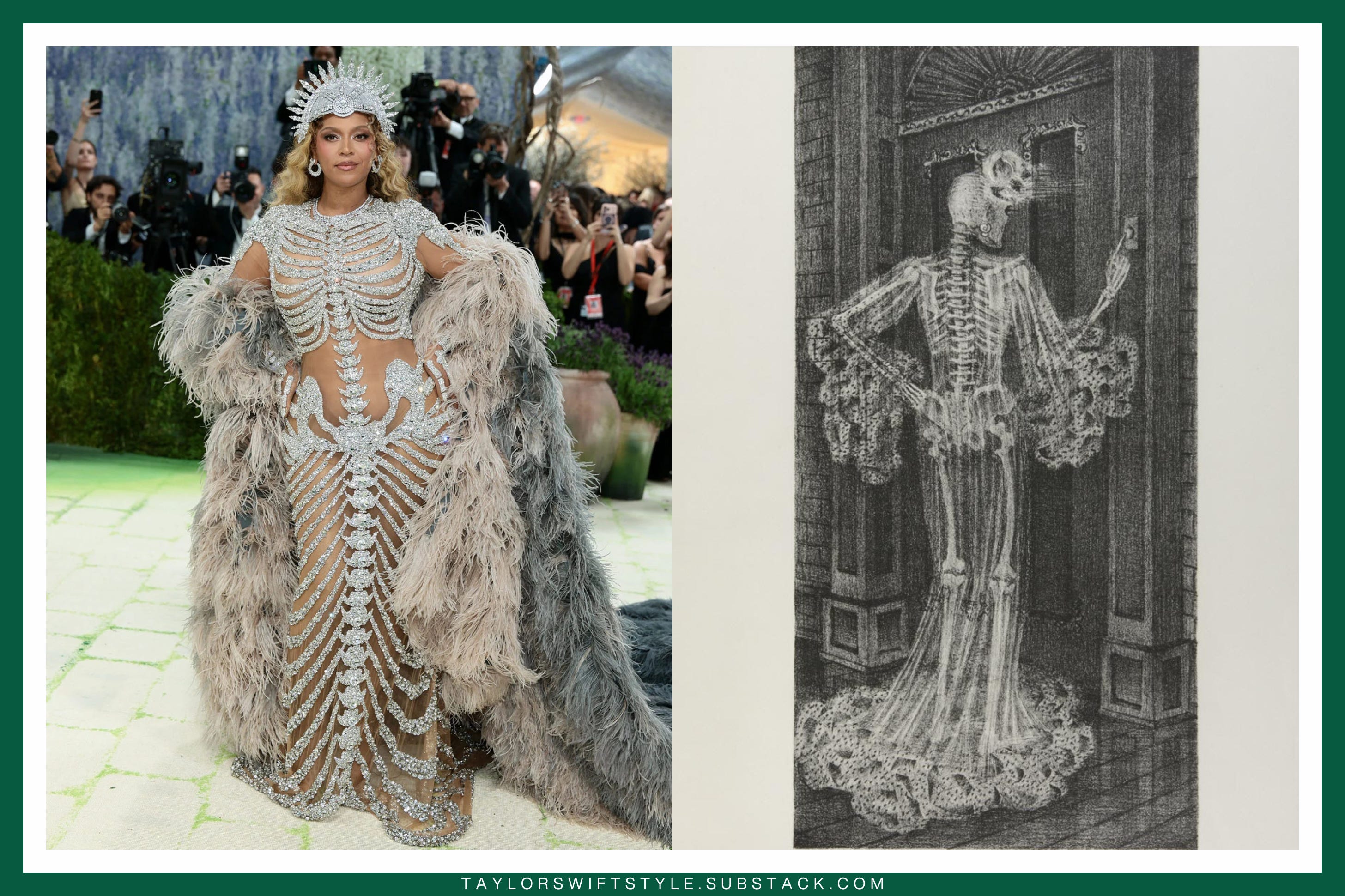
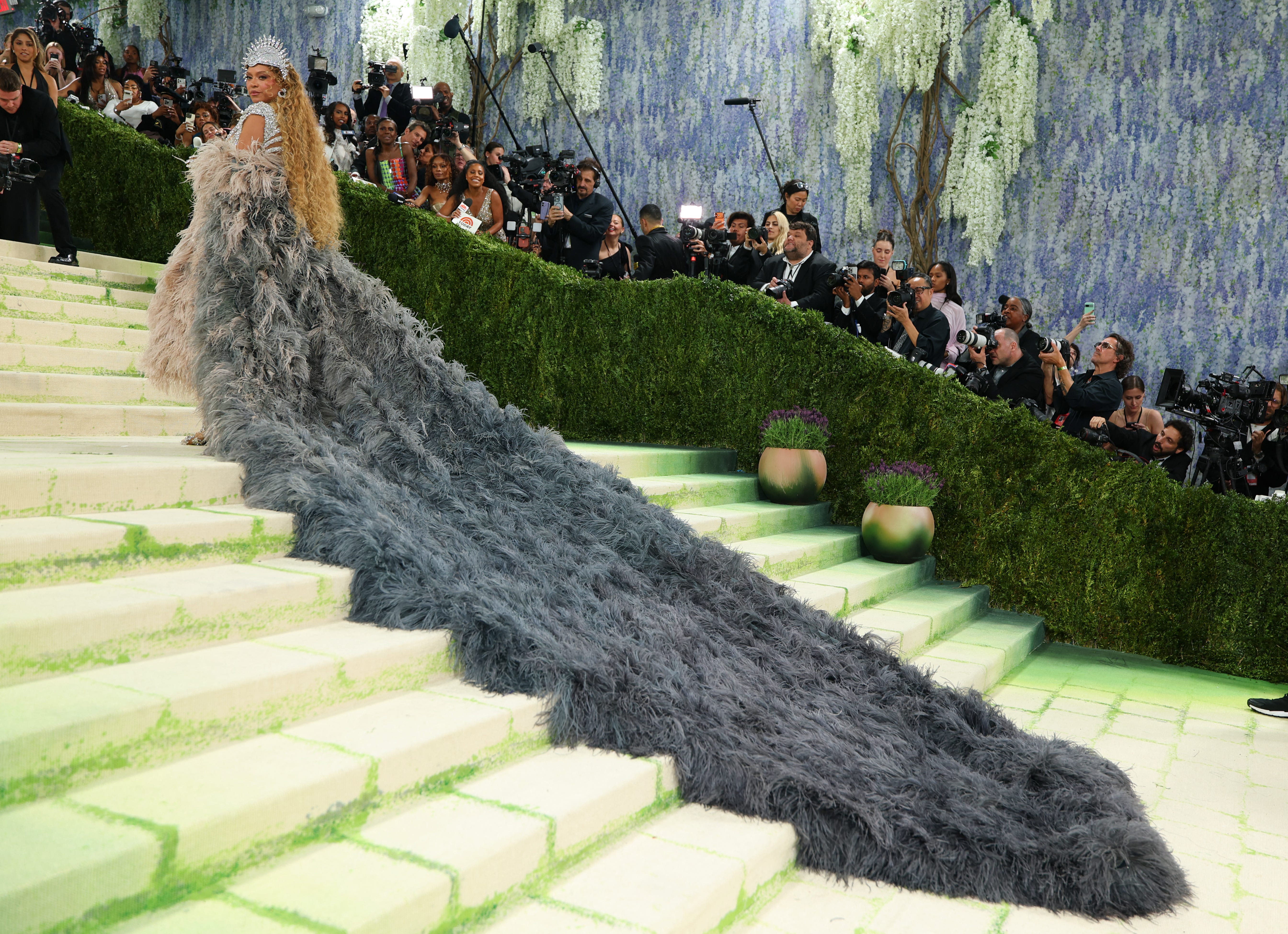
Beyoncé in Olivier Rousteing: Even if she wasn’t a co-chair for the evening, Beyoncé’s extended time away from the Met Gala steps - a decade! - would have left expectations high regardless. When she did finally arrive, later than most attendees might I add, which certainly gave her the space that her custom gown’s cape required, she did so in a worthily dramatic fashion.
Having had a longstanding relationship with Olivier Rousteing, Beyoncé tapped the former creative director of Balmain to create her glittering skeletal gown - a visual that certainly tapped into the “body-centric” ideals of the exhibit.
I thought the ombré effect of the feathers added to an almost “plucked over” feeling of decomposition and decay. Art historians online helpfully sleuthed out the possible inspiration point for her ensemble: a haunting lithograph by New Orleans-based artist Caroline Durieux. The artwork, titled The Visitor, reimagines the grim reaper as a feminine seductress. I felt the crown-like headpiece didn’t add much to the ensemble, though it did seem to underscore Beyoncé iconography of the past — I’m reminded most vividly of her Peter Dundas golden goddess look at the 2017 Grammys.
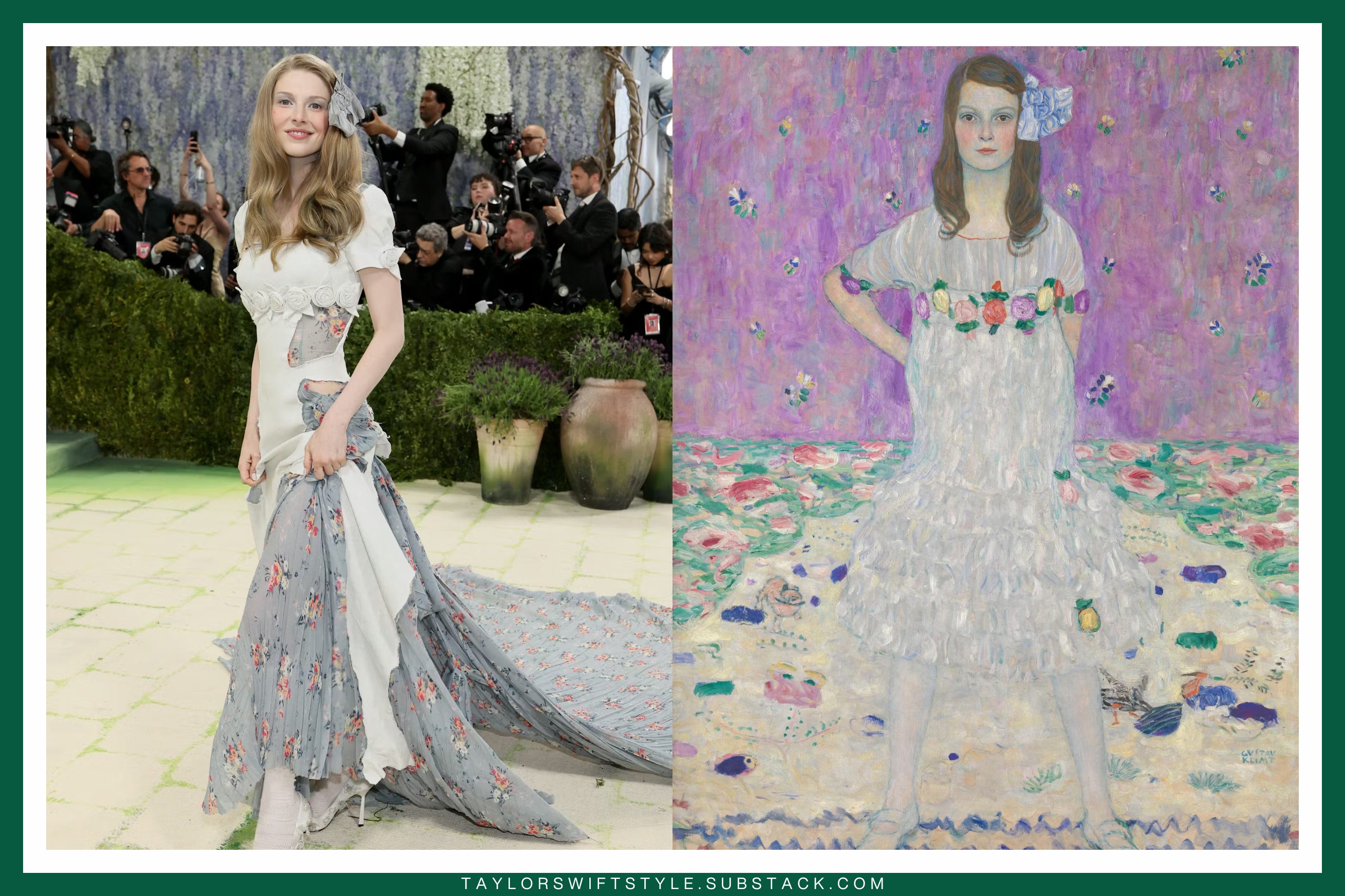
Hunter Schafer in Prada: One of the night’s clearest answers to the theme, Hunter’s printed silk chiffon gown took inspiration from a classic Klimt painting: Mäda Primavesi. Plus you always know I’m a sucker for a bow! My favorite detail was the tattered motif throughout the dress, exposing a whimsical floral print underneath. It gives the garment a bit of a storied look, as if Hunter found the dress tucked away gathering dust in her grandmother’s attic.
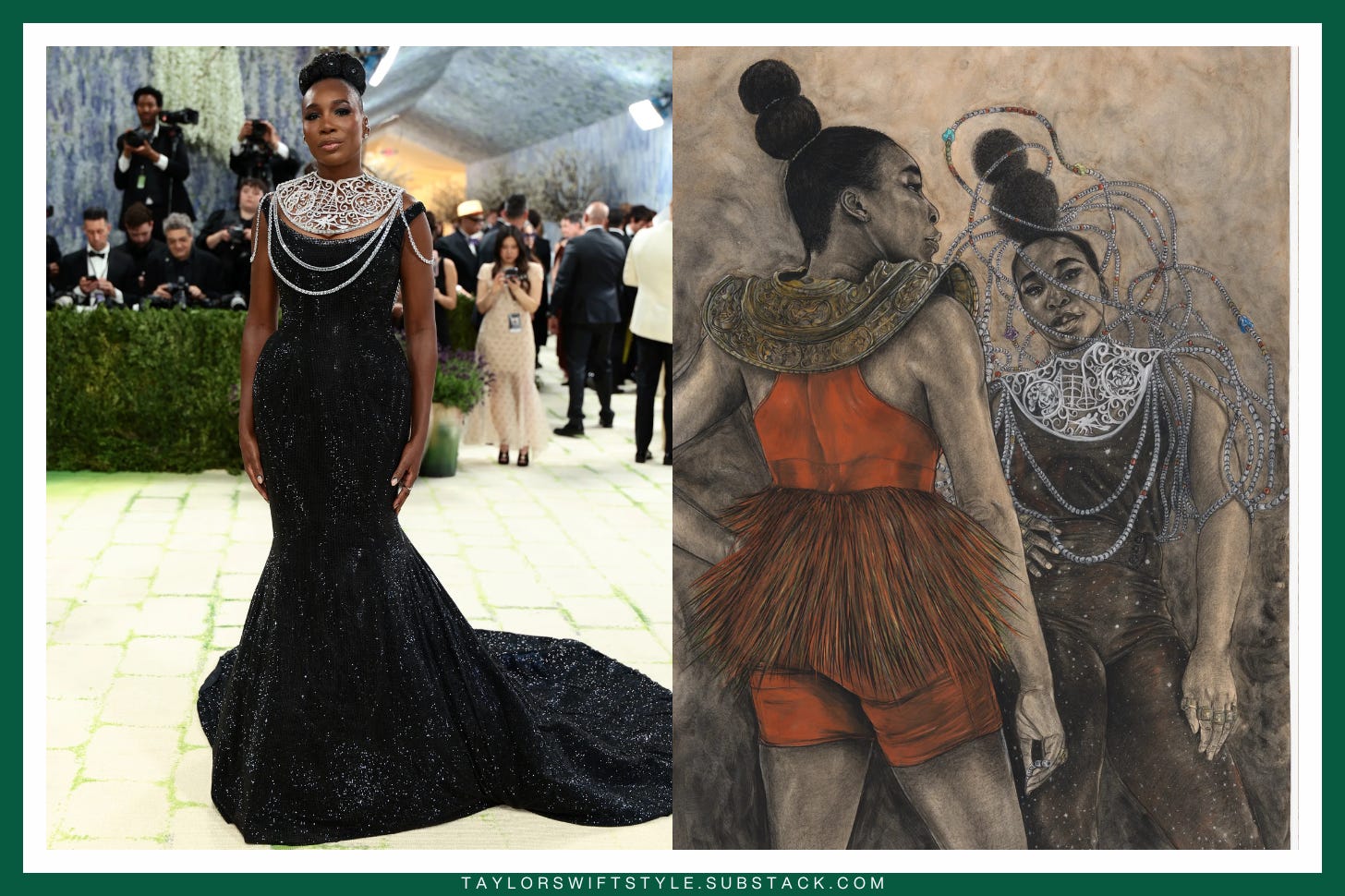
Venus Williams in Swarovksi: While Venus has long been a Met Gala regular, this year she joined fellow attendees Beyoncé and Nicole Kidman as co-chair, making art come to life in the process. “Fashion has always been a huge part of how I express myself, both on and off the court, so being part of an event that celebrates the intersection of art, culture, and identity feels really full circle for me,” Williams explained to Vogue. Indeed, both her and her sister Serena are famous for their love of fashion and revolutionized tennis attire with their bold game day choices. Her dress, a custom look from Swarovski composed entirely of their crystals carefully enmeshed, is lifted directly from a portrait of Williams herself titled Venus Williams, Double Portrait that was commissioned by the National Portrait Gallery.
Evoking the painting, for Williams, “felt like a personal way to connect with ‘Costume Art’—using fashion to tell a story about legacy and progress and honoring those who made it possible.” Every detail from the painting, including the Wimbledon-inspired plate she dons as armor, was thoughtfully recreated for Williams to physically embody on the red carpet. The plate itself was layered with references to Williams’s personal history and public legacy, weaving together emblems tied to her family and career with subtler tributes to tennis’s long battle for equal pay and the Black pioneers who shaped the sport in its earliest years. I suppose you could say this look was … a serve ;). Sorry!
Even Statues Crumble If They’re Made To Attend the Met
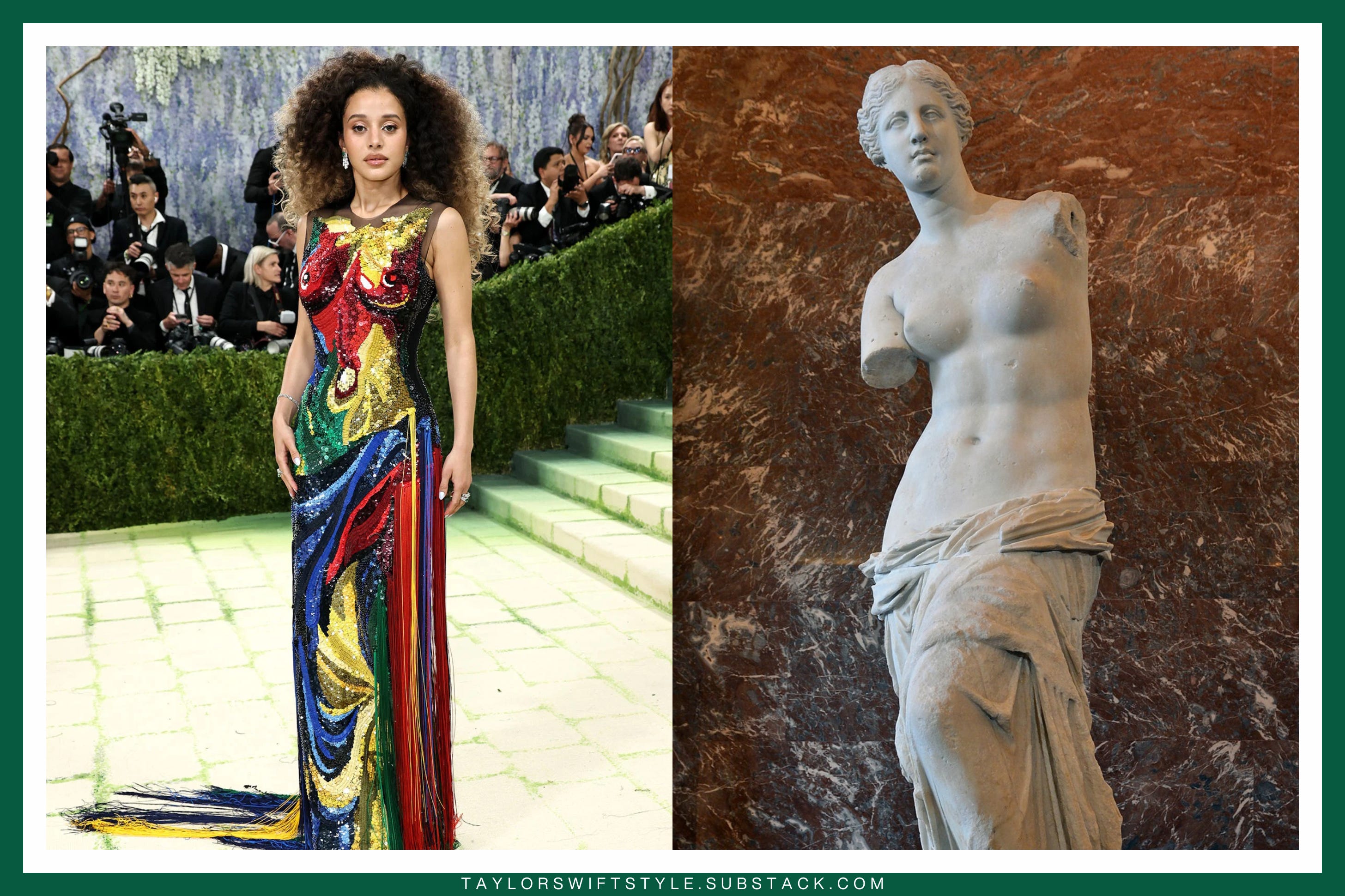
Chase Infiniti in Thom Browne: There were a number of homages to the Venus de Milo statue this evening, but my favorite was Thom Browne’s bold and graphic take for Chase Infiniti - who has proven to be quite the fashion force the last year. Hard to believe this is her first time at the Met Gala! While the sculpted, illusory mapping of the body onto a garment has been done before, indeed this particular gown clearly references Thom Browne’s Spring 2026 collection, I found myself enamored by expressive splash of color opted for here. It gives the look a playful point of view. I also thought choosing to make the gown sleeveless was a rather cheeky nod to the famously armless Venus.
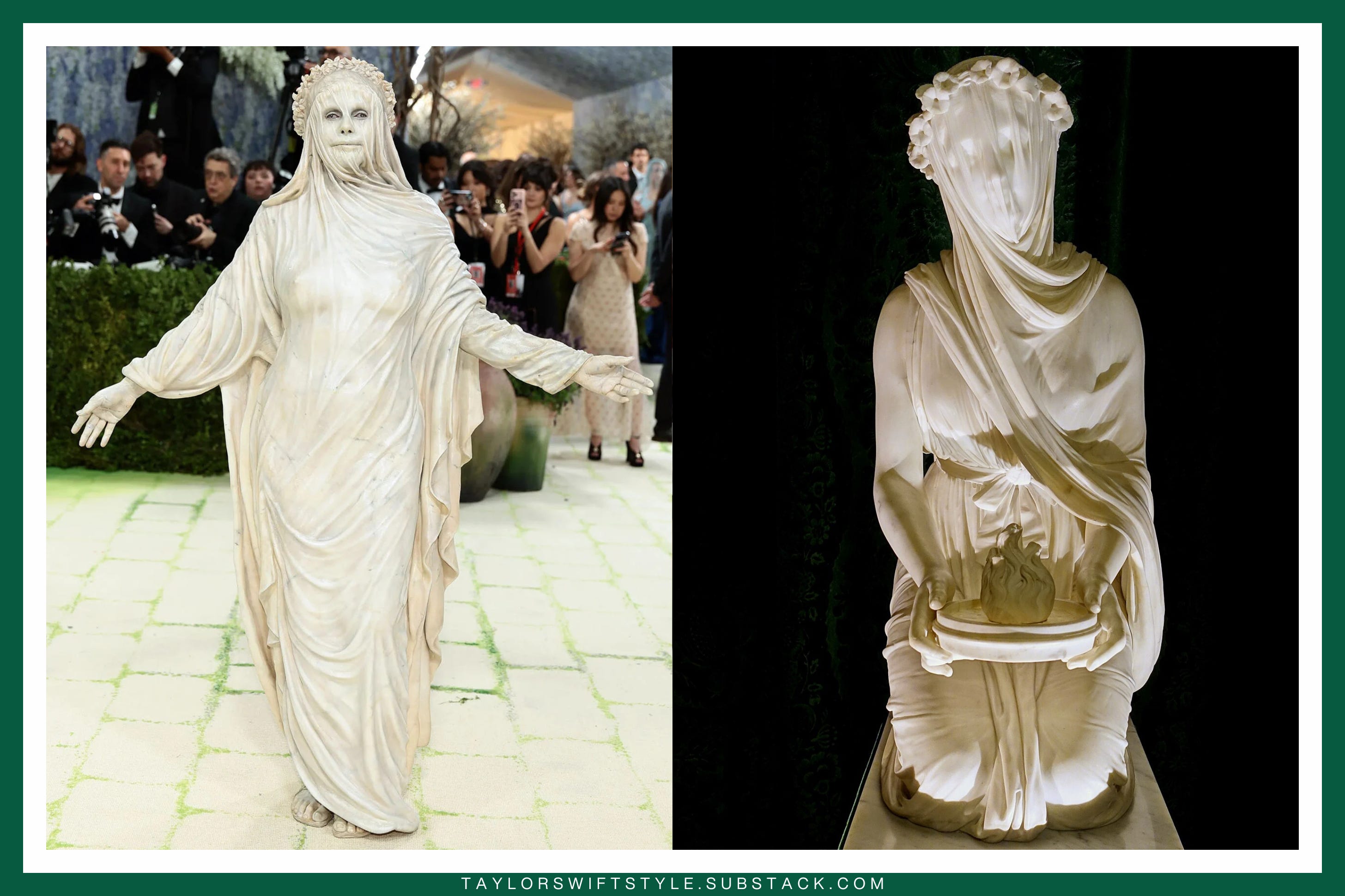
Heidi Klum in Mike Marino: The worst “offenders” of the Met Gala are those who choose to ignore the theme entirely in favor of showing up and looking pretty. There’s certainly nothing wrong with a beautiful gown. But there are dozens of other red carpet opportunities to wear a classy, elegant look. The Met is for those willing to commit to the bit! If there was anyone who was going to put the “costume” in “Costume Institute” it was model Heidi Klum whose Halloween parties have become something of legend. While those eyes are going to be the fuel of my nightmares for some time to come, ahhh!, I will absolutely applaud her for choosing to GO THERE. And after all, the prosthetics required of her longtime makeup designer, Mike Marino, in order to pay homage to Raffaelle Monti’s 1847 sculpture The Veiled Vestal really is an art form in and of itself. That illusion of the veil sculpted over her face! Quite the chilling feat for the queen of Halloween.
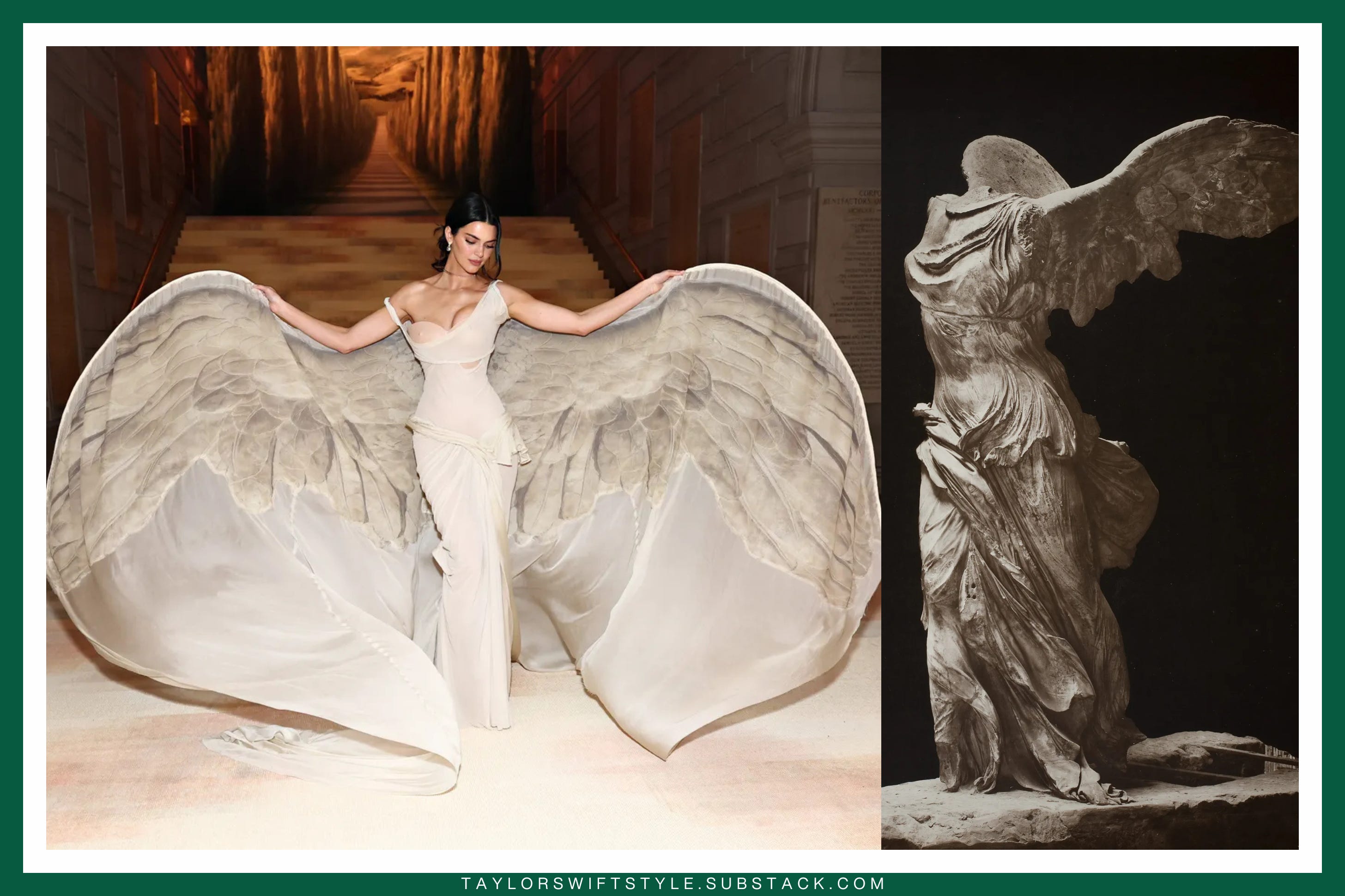
Kendall Jenner in Gap Studio: Every day I feel grateful for Zac Posen. Really! Since taking over the creative director role at Gap, the American designer has infused so much life not only into the brand but into U.S.-based fashion houses at large. He’s demonstrated how to pivot a design firm in the right direction for the modern consumer, while still honoring the brand’s roots. To be sure, Kendall Jenner is an easy canvas to work with. I can’t deny the model makes clothes look good. On her, Posen takes the Gap staple — a plain white t-shirt — and elevates it into a contemporary and glamorous ode to one of the most recognized statues the world over: the Winged Victory of Samothrace. “I took a white Gap T-shirt off of my back in my studio and started pulling it and tweaking it and figuring out how … to interpret the sculpture that influenced humanity and our modern culture,” Posen explained to Vogue. Genius. The winning photograph of the night was when Jenner let the ensemble take flight via 3D-printed “wings” made from chiffon. Dreamy!
You Showed Me Colors You Know I Can’t See Anyone Else Wear
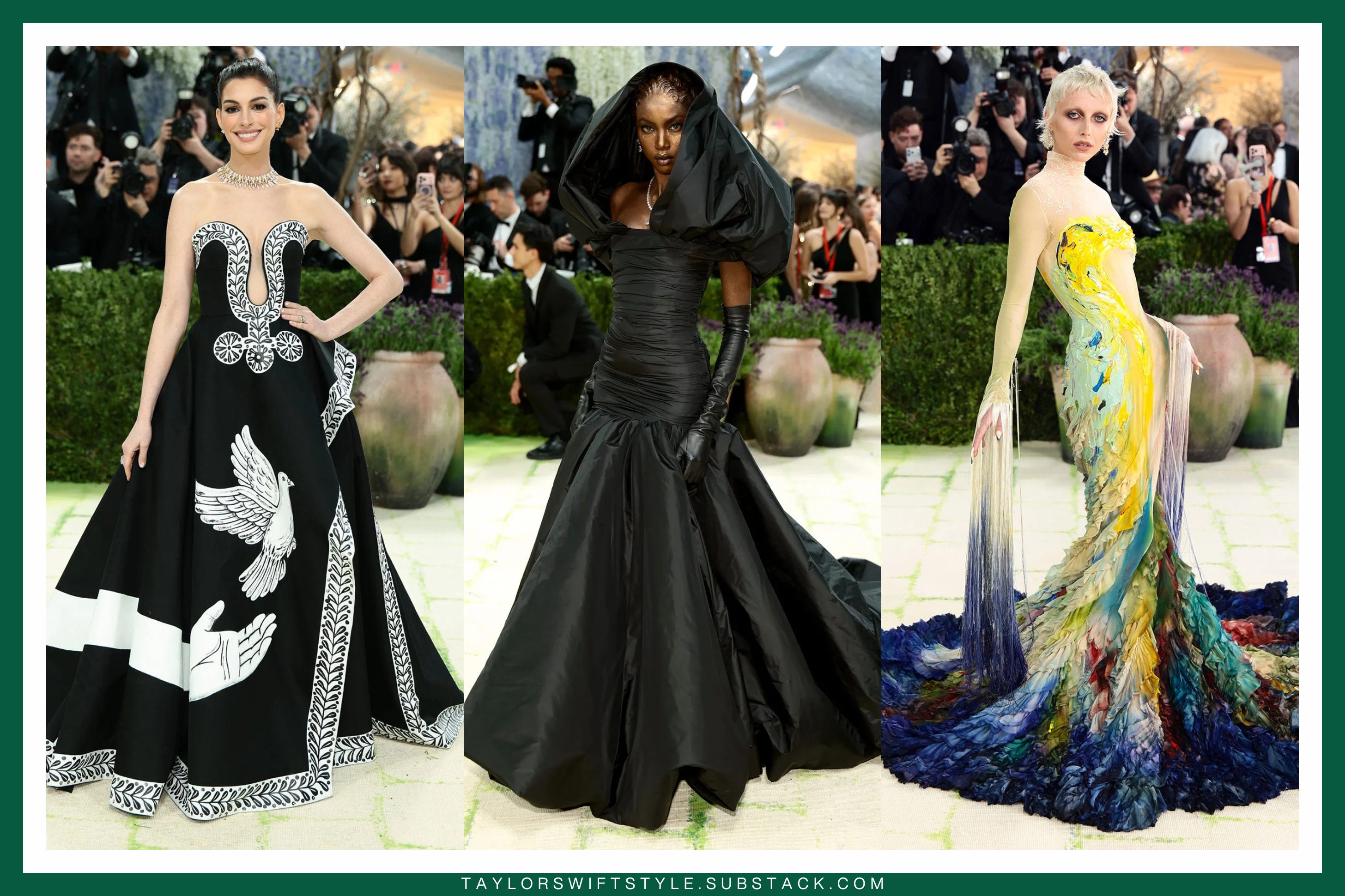
Anne Hathaway in Michael Kors: Deceptively simple, but effectively on theme. Where some attendees were inspired by decorative arts, Anne Hathaway - and her stylist, Erin Walsh, turned to a poem as inspiration for her ensemble. The John Keats poem Ode On A Grecian Urn states in its parting lines: “Beauty is truth, truth beauty - that is all ye know on earth, and all ye need to know.” Walsh explained, “It felt simple and elegant and totally clear.” To bring the artistic element to the gown, Kors recruited his longtime friend and artist Peter McGough to hand-paint motifs like that which you’d see on a Grecian urn. “This dress, to me, is about the goddess of a Grecian urn, and what I love about the dress is that it turns the person into an object of art,” explained McGough to Vogue. “It’s moving art—fashion and art, they go together for me: Fashion is wearable art,” he said. I did find the Bulgari necklace felt a tad disjointed from the rest of the look. Perhaps something more botanical to tie into the trim detail on her gown or a classically “Greek” style like the distinctive key motif detail that borders many pieces of Grecian art would have served the look more effectively.
Anok Yai in Balenciaga: On the note of underrated art forms, I loved how Anok used makeup (is that not painting using the face as a canvas?) to evoke the Black Madonna. “In the climate that we’re living in right now, we need hope,” she said to Vogue, adding, “I feel like being the Black Madonna in a Trump world is going to send that message.”
Emma Chamberlain in Mugler: She was one of the first on the Met Gala red carpet and, truthfully, set the bar high. Her custom Mugler look is both referential to the house - it nods to Look 56 from Thierry Mugler’s Fall Couture 1997 collection - and to Chamberlain’s own personal history. “I’m somebody who really believes that fashion is art,” Chamberlain told Vogue. “My dad is an oil painter and a watercolor painter, and I grew up in a very creative household with art all over my house,” she explained. Thus paintings, and paint itself, represent nostalgia and comfort for her. What better way to honor that past than to immerse yourself in that feeling? The dress, hand painted by artist Anna Deller-Yee, took 40 hours to paint and multiple days to dry. I just love how that ombré fringe cuff falls into the puddle of color around her. It simultaneously gives the sense that she is both rising up, birthed from an artist’s palette, and like she’s dissolving into a pool of colors. Incredible!
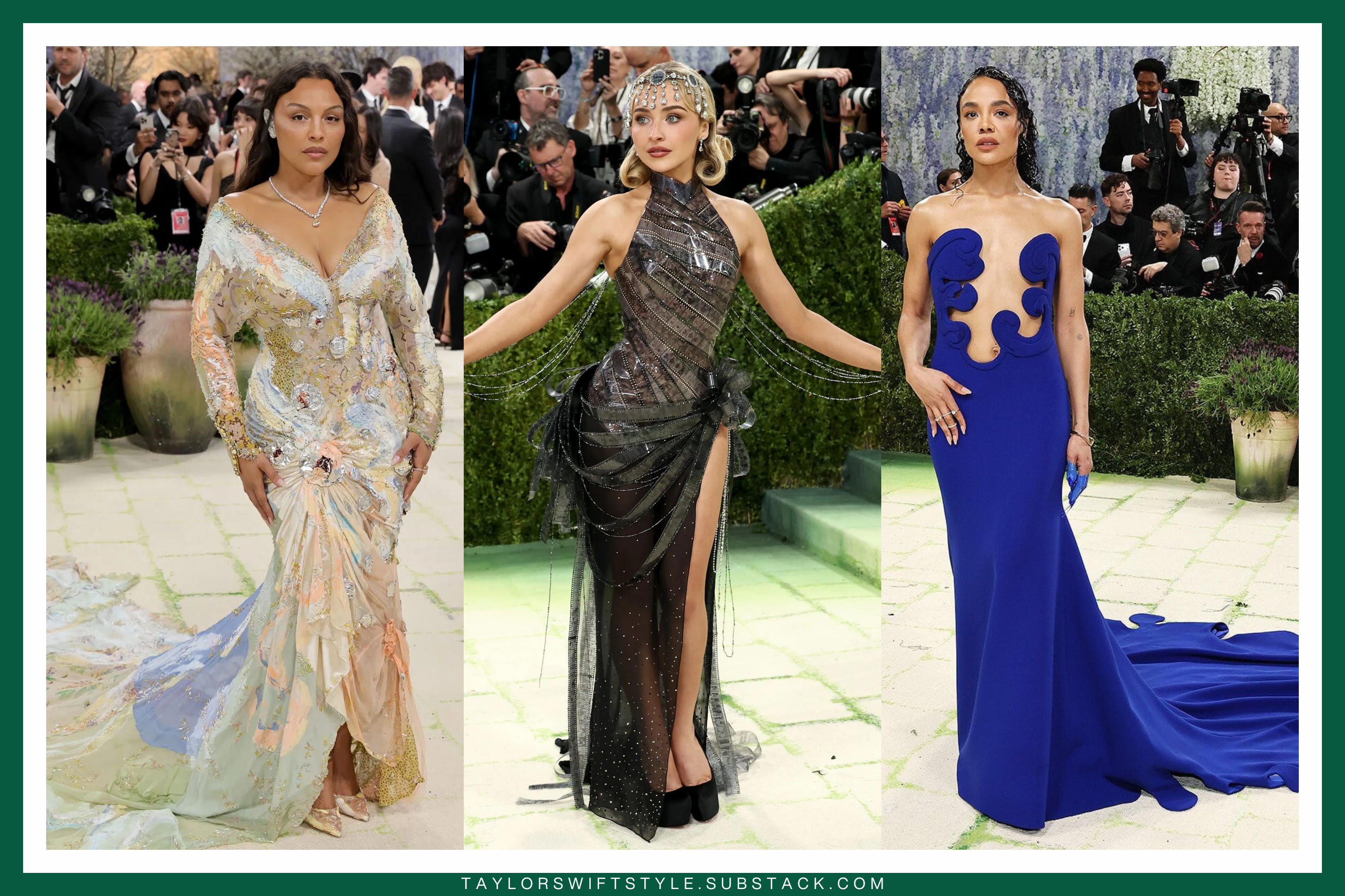
Paloma Elsesser in Bureau of Imagination: This dress definitely had an artistic vision going for it, with sustainability in mind. It was meticulously constructed from 30 vintage dresses sourced on eBay then hand-painted and finished with metallic embroidery in Milan. The effect is a surface that resembled pigment layered across canvas turning the body into an impressionistic work of art. This was one of my favorites from the night.
Sabrina Carpenter in Dior: As a minimalist shoe lover, not even those hefty “Dolly Alta” platform Louboutins could dampen my love for this custom Dior look on Sabrina. She was one of the few on the Met red carpet who ticked all my boxes: 1) She referenced art: In this case, she was a rare example of someone looking to film as an art form 2) She interpreted the concept into a costume worthy of the Met steps: Strips of actual film were transformed into a stunningly sculpted dress. Kudos to the Dior team on this silhouette - it’s fantastic and fits Sabrina impeccably. 3) She extended her personal brand: Those film strips were lifted from Audrey Hepburn’s 1954 film Sabrina. How cheeky! The reference is obvious, playful, and delightfully meta. Perfectly Sabrina.
Tessa Thompson in Valentino: It’s not cerulean, it’s … International Klein Blue. It’s always a treat when someone not only manages to interpret the evening’s dress code correctly, but does so in a beautifully creative way. This Valentino garment delightfully gets right at the intersection of fashion and art, immersing Tessa Thompson in a very particular shade of ultramarine blue iconified by the French painter Yves Klein. Klein memorably dipped models in the hue for his project “Anthropometries”, thereby transforming them into living paintbrushes. The styling does a lot of lifting here to evoke that sentiment beyond just the use of color, from the paint-like splodge of the hem to the dripping manicure daubed on her fingertips.
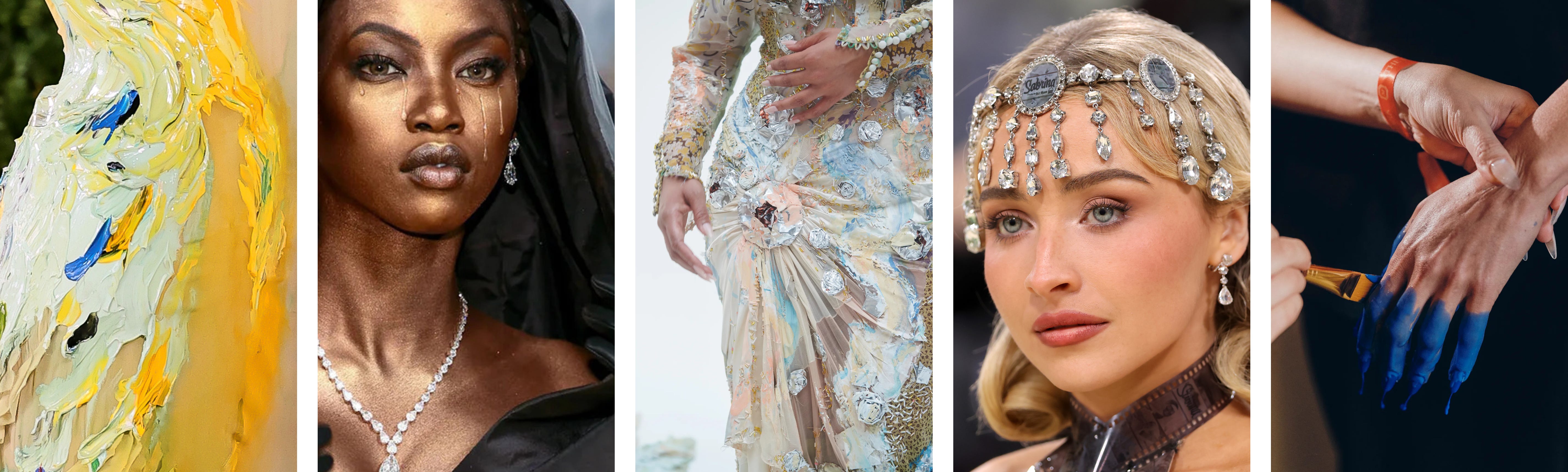

My favorite works of art from the night? I’d hang photos of Emma Chamberlain and Chase Infiniti in the Louvre. With a special temporary exhibit set up for Paloma Elsesser, too.
Before signing off, one final post-script look I wanted to give a mention: Blake Lively’s sunset-washed brave face appearance at the closing stages of the carpet.
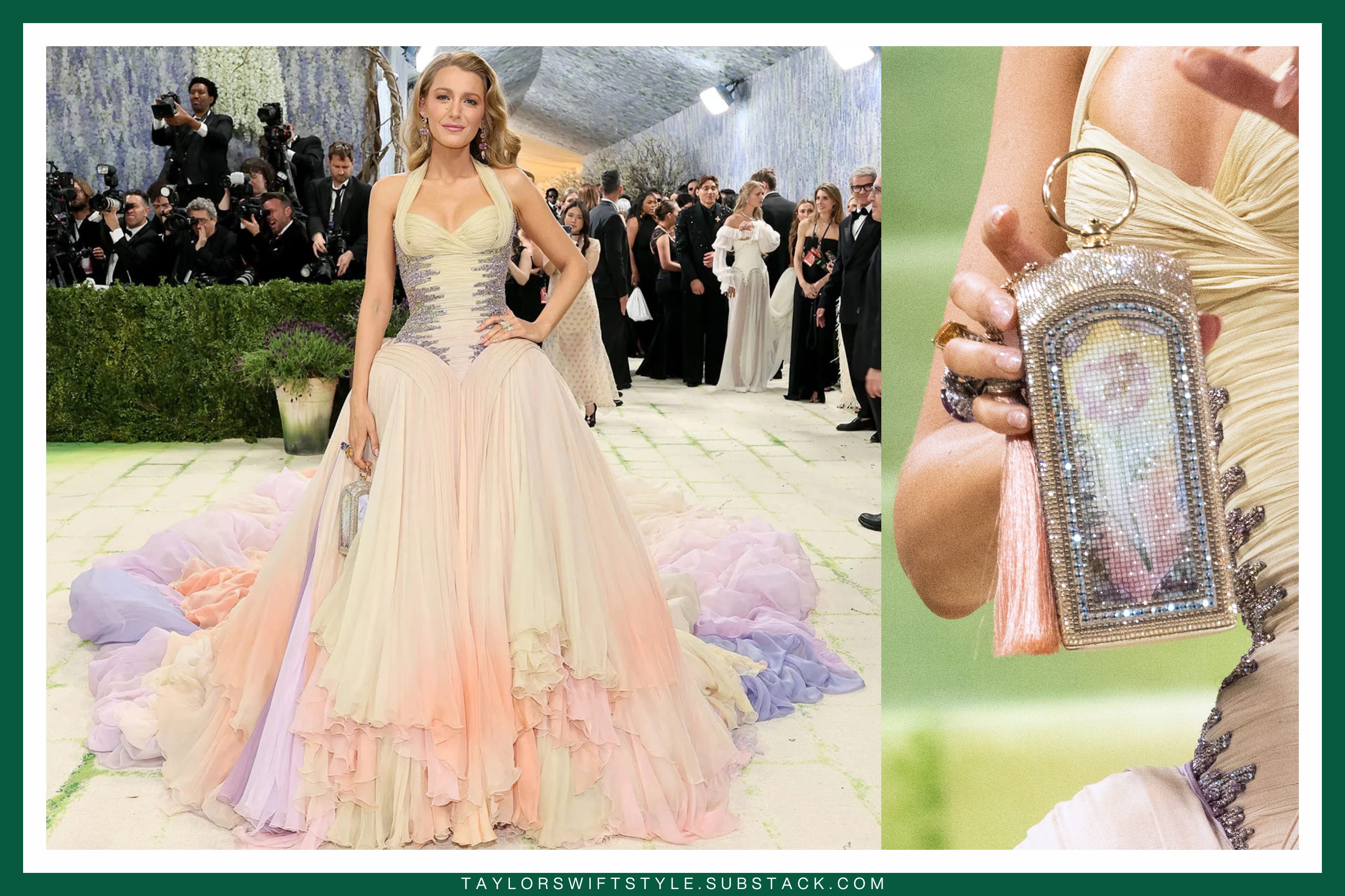
In the hours following the conclusion of her legal battle with Justin Baldoni, Blake looks like a softly painted watercolor in a glam way that Versace iconified in the early 2000s. The personal artistic touch? A custom Judith Leiber clutch panelled on each side with bedazzled versions of artwork by each of her four children. What a beautiful visual reminder of the important things worth keeping close at hand - literally.
Your turn! Who were your favorites at the Met Gala?

Hudson Williams was my favorite. Something about the swan eye makeup and hair made to look like wings, plus that jacket was just mesmerizing.
FINALLY the analysis I was looking for, but couldn’t quite put into words. Thank you!